
Month: August 2026

Choosing strong TOK real-life situations is often what separates a genuinely compelling essay or exhibition from a generic one — the same knowledge question can be explored through a vague, forgettable example or a sharp,…
The same TOK essay mistakes appear year after year across almost every prescribed title, and most of them have nothing to do with a lack of understanding of Theory of Knowledge itself — they’re structural…
Looking at strong TOK Exhibition commentary examples is one of the fastest ways to understand what separates a high-scoring exhibition from an average one — not by copying the content, but by studying the structure…

TOK prescribed titles are the fixed set of questions or statements released by the IB each year, from which you must choose one to build your entire TOK Exhibition around. Understanding how to actually interpret…

Choosing your TOK Exhibition objects is the single decision that determines how strong your entire commentary can be — pick three objects with a weak or forced connection to your prescribed title, and no amount…

Extended Essay deadlines are set individually by each school, not by a single universal IB-wide date, which means your actual timeline depends on your school’s internal schedule — but nearly all schools follow a broadly…
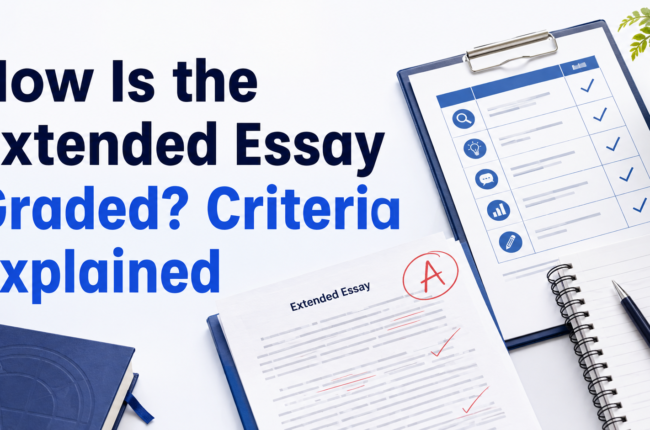
Understanding how the Extended Essay is graded is one of the most effective ways to improve your final mark, because the assessment is based on five explicit, published criteria — meaning you can write directly…

The single most common reason an Extended Essay in History scores lower than expected isn’t weak research — it’s that the essay ends up telling a story instead of building an argument. Examiners consistently flag…

An Extended Essay in Psychology most commonly takes one of two forms: a genuine primary research study you design and carry out yourself, or a research-based essay analyzing and evaluating existing psychological studies and theories.…
An Extended Essay in Economics needs to do something most students underestimate: apply real economic theory to a specific, real-world case, using genuine data or evidence — not simply describe an economic issue in general…